Search has always been a changing presence in marketing. Google has regularly rolled out numerous algorithm updates over the years, each shifting how websites earn visibility. Any business that adapts to these changes can continue growing, while the ones that don’t will keep falling behind.
Mitro Digital Marketing understands how artificial intelligence is changing the way people find information and how those changes affect rankings. Answer Engine Optimization (AEO) shapes how your content should be optimized, and this post will show you how.
What Is SEO, and Why Does It Matter for Your Business
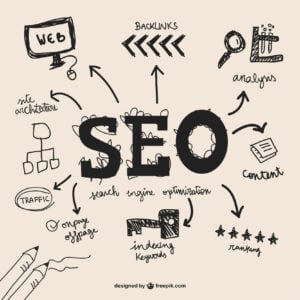
Search engine optimization (SEO) is the practice of making a website easier for search engines to locate, understand, and rank in search results. Good SEO practices mean your webpage will appear sooner in search results, which can increase your business's success. SEO looks at your webpages, the technical structure of your site, the links to and from your content, and how well your content matches what people are searching for.
The goal of traditional SEO is to get web content to rank highly on a search engine results page, typically Google, so people can easily access your website. Higher rankings mean more web traffic. More web traffic means more leads and sales. Despite all the changes, the core function of this loop is still alive and worth investing in.
SEO services remain one of the most cost-effective ways for a business to achieve reliable, long-term visibility. A well-optimized website can drive traffic around the clock without paying for every click.
What Is AEO, or Answer Engine Optimization?
Answer engine optimization (AEO) is the practice of creating content in a way that AI tools can cluster and use as answers to user questions.
This is important because more and more people are using AI like Claude and ChatGPT to ask questions, and these systems synthesize information from multiple websites to provide direct responses to their users.
When a user asks AI, "What is the best way to reduce glare in an office?" they may get a complete AI-generated answer directly on the page without clicking anything. If your business offers a service related to that question, your web content may be what AI pulls its answer from. This is the goal of AEO.
How AI Search Is Changing Visibility
The shift here is subtle, but important. Traditional SEO measures success in rankings and clicks. AI search optimization measures something different: whether your content is being cited, referenced, or used as a source by AI tools.
Here is an example of how this works:
A property manager searches for commercial window tinting options in their area. In the past, they would scroll through a list of results and click a few links. Today, they might ask an AI assistant the same question and receive a direct recommendation that references specific businesses or service types.
The businesses that show up in that answer are not necessarily the ones that paid the most for ads. They are the ones whose content was structured clearly enough for AI to understand and trust.
The same logic applies to professional services. A business owner searching for a digital marketing agency might ask an AI platform to explain what local SEO entails before deciding whom to hire. If your website has a clear, well-written explanation of local SEO that thoroughly answers common questions, you are more likely to be part of that conversation.
According to BrightEdge research, AI-generated search results from large language models are appearing in an increasing percentage of queries, and the content cited tends to share specific qualities: it is authoritative, clearly structured, and directly answers the question being asked.
SEO vs AEO Difference: Not a Competition
Here is the most important thing to understand: AEO and SEO are not competing strategies. They are complementary. Good AEO is built on a foundation of good SEO.
If your website is not technically sound, does not load quickly, or lacks a clear structure, AI tools will not be able to parse it well enough to cite it. If your content is thin or vague, it will not earn trust from search engines or AI platforms. The technical and content fundamentals of traditional SEO are the same building blocks that enable AEO.
The difference is in how you think about content goals. Traditional SEO content is often written to rank for a keyword. AEO content is written to answer a question completely. Both can exist on the same page. In fact, the best content does both at once.
You can read more about how Mitro approaches this balance through our SEO services for small businesses.
What to Adjust Now
You do not need to overhaul everything. Most businesses that have a solid SEO foundation are closer to AEO-ready than they think. There are a few specific things worth reviewing.
First, look at how your content answers questions. If your pages are focused on keywords but do not explain things directly and clearly, that is worth fixing. Think about the questions your customers ask most often and make sure your website answers them in plain language, not just in keyword-heavy phrasing.
Second, think about structure. AI tools favor content that is logically organized. Headers that reflect real questions, paragraphs that each cover one idea, and pages that have a clear purpose all make your content easier for AI to understand and use.
Third, consider your authority signals. Being cited by AI platforms often comes down to whether your website is seen as a reliable source. This means having accurate business information, earning quality backlinks, maintaining positive reviews, and publishing content that demonstrates real expertise on the topics you cover.
Fourth, consider featured snippet optimization. When someone sees your website's summary (featured snippet) in the search results, what does the snippet say? Make sure it's answering a question in 40 to 60 words.
Finally, do not stop building your local SEO presence. Local searches are one area where traditional SEO signals, such as your Google Business Profile, reviews, and local citations, still have a significant influence on both standard and AI-driven search results.
AEO vs SEO: What You Need To Know
SEO is not being replaced. It is growing. Answer engine optimization is the next layer of a discipline that has been evolving for decades. Businesses that treat it as such, building on what already works rather than starting over, will be the ones that maintain visibility as search continues to change.
If you want help ensuring your content strategy is ready for both traditional and AI-driven search, contact the Mitro Digital Marketing team for a free consultation.
Related Posts

Responsive Web Design in the Outer Banks: Why It Decides Who Gets the Call
Local SEO, Mobile Responsive Web Design, Uncategorized, Website Design

Content Marketing for Outer Banks Businesses
Digital Marketing, Local SEO